Before the wedding day
The planning guide
A wedding day takes months to plan and happens only once. Much of what you will see in the photographs and in the film is decided long before we get the cameras out. We have gathered here what we go through with our couples, in the order the questions tend to come up. Not all of it will suit every wedding, so take whatever is useful to you.
The choice
Before you book a photographer and filmmaker
Most couples start with the portfolio, and it is the right place to begin. There you can see how someone works with light and with people, and whether their pictures are the kind you want for yourselves. But a portfolio shows the best pictures from many weddings, so ask to see one whole wedding as well, from getting ready right through to the party.
Just as important is how it feels to talk to the people you are thinking of booking. Your photographer and filmmaker will spend the day closer to you than most of your guests, and you should be able to relax in their company. It is best to meet before you decide, and to notice whether they ask about you or mostly talk about themselves.
If you are booking your photographer and your filmmaker separately, it is worth asking whether the two have worked together. Two teams who do not know each other will have to share the same space during the ceremony, the portraits and the first dance, and that is easier for people who have done it before.
Questions to ask us and anyone else you speak to
- Can we see a whole wedding, from getting ready to the party?
- How do you work with couples who are not used to being in front of a camera?
- What happens if you fall ill on the wedding day?
- When do we get the photographs and the film, and what is included?
- What does the agreement say about cancelling and about moving the date?
The meeting
The conversation before the wedding
A good meeting before the wedding is mostly about you. We want to get to know you and understand what kind of people you are, what you like and what you would like our help with. That says more about which pictures you will like than a shot list does.
Do bring pictures you like, your own or other people's, and they need not be from weddings. It is often easier to point to a picture than to put into words what you are after.
We need to know who is closest to you, such as a grandmother or a friend who has travelled a long way. We do not know your guests, so if you tell us who these people are, we will make sure they are in the photographs and in the film.
Tell us as well if anything is sensitive. That might be relatives who would rather not stand side by side, a guest who does not want to be photographed, or something about yourselves that you would prefer not to see in a picture. If we have heard about it beforehand, none of us has to give it a thought on the day.
The light

The portraits and the last hour before sunset
Light affects the pictures more than anything else, and it can be planned for. In the last hour before sunset the sun is low, and the light is usually softer and warmer than earlier in the day. In the middle of a sunny summer's day the sun is high, the shadows on a face are harsh and most people squint.
Portraits in evening light are a recommendation, not a requirement. It is a matter of taste, and good portraits can be taken at any time of day. What matters is that you know what the light will look like at the times you have chosen, so that nothing comes as a surprise on the day.
If your ceremony is outdoors in the middle of the day, the pictures come out best if you stand in the shade, under a tree or on the side of the building that is out of the sun. Then you are both in the same light, and neither of you has to squint.
In summer the sun sets late around Malmö and Copenhagen, just before ten in June. If you want the evening light, we slip outside with you for a while during the evening, and you are back with your guests before anyone has had time to miss you. In midwinter the sun has set before four, and an early ceremony with the portraits straight after is one way of making the most of the daylight.
An overcast day is no bad thing for photographs. The clouds spread the light and make it even and soft across the whole face, so that we can photograph almost anywhere and at almost any time of day.


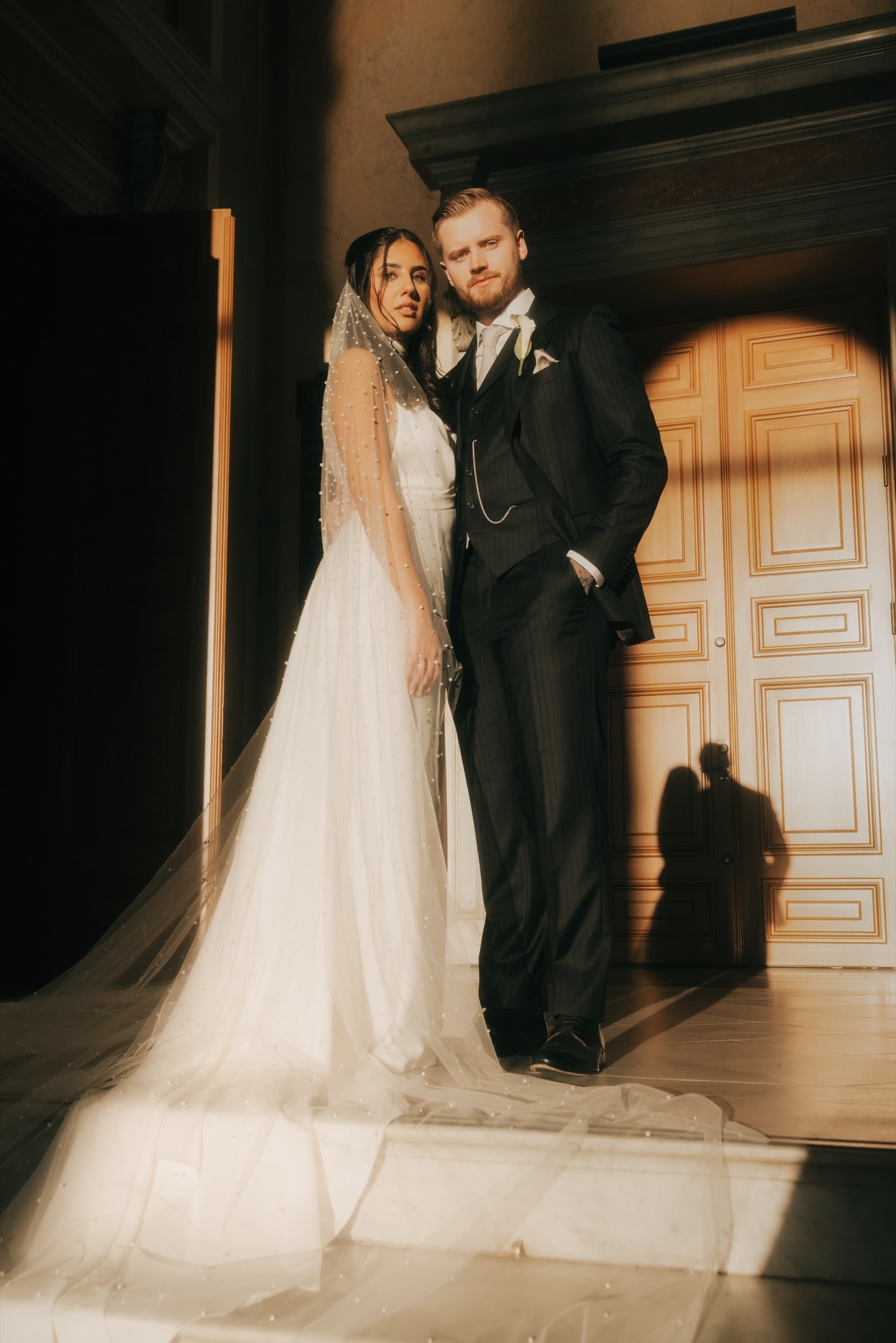
Sofiero, Helsingborg
May · 4 to 5 pm
Afternoon daylight, with an external flash to help.
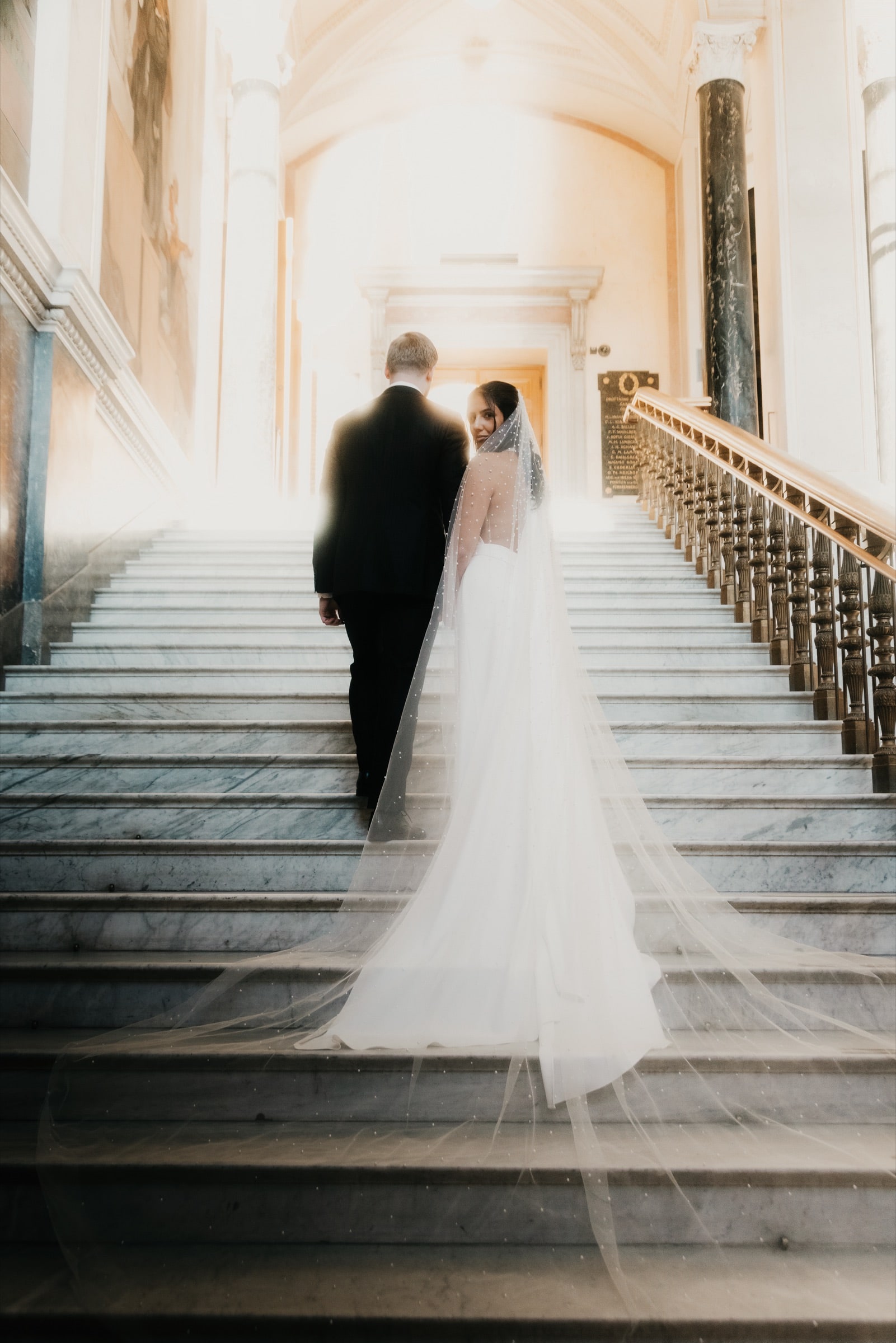
Nationalmuseum, Stockholm
October · 4 to 5 pm
The hour before sunset, in natural light alone.
Turn the ring to your date, or drag the slider beneath it, and you will see when the sun sets, when the light is at its softest and where the moon stands that evening.
- Date
- 14 August
- Sunset
- 20.50
- Softest light from
- 19.50
- The moon 2027
- Waxing gibbous
Turn the ring to your date
- Daylight
- Night
- The hour before sunset
- The moon
Approximate times with a clear horizon, rounded to the nearest five minutes. The moon is shown where it stands highest in the sky that day.
The whole year as a table
| Month | First day | Last day |
|---|---|---|
| January | 15.45 | 16.40 |
| February | 16.40 | 17.40 |
| March | 17.40 | 19.40 |
| April | 19.45 | 20.40 |
| May | 20.45 | 21.35 |
| June | 21.40 | 21.55 |
| July | 21.55 | 21.20 |
| August | 21.15 | 20.05 |
| September | 20.05 | 18.50 |
| October | 18.45 | 16.35 |
| November | 16.30 | 15.45 |
| December | 15.45 | 15.45 |
The venue
Where the pictures are taken, and where we go if it rains
Most venues have a couple of spots that are obvious for portraits and a few that nobody thinks of until you are standing in them, such as a staircase, an avenue of trees or a window in a corridor. It pays to walk round the venue beforehand, ideally at the time of day the portraits will be taken, and see where the light falls. If the venue has tall trees or buildings to the west, the sun disappears a good while before sunset, and the portraits then need to start a little earlier.
We look first for somewhere close to the reception. Any time spent walking or driving comes out of either the portraits or your time with your guests, and there is usually something lovely within walking distance.
Here in Scandinavia the weather can turn quickly, so for us a backup plan is a must. Together with you we settle on an indoor alternative in case it rains, preferably a room with large windows, so that nobody has to make a decision at the last minute.
Have a word, too, with whoever is marrying you about what they allow in the way of photography and filming during the ceremony. Some churches and celebrants have rules about where the photographer and filmmaker may stand and whether they may move around, and it is good to know well in advance.
The schedule
The day in order, with time to spare
When the schedule holds, you have time to be with each other and with your guests, and we have time to be in the right place. Most things on a wedding day run over a little, so it is wise to allow an extra quarter of an hour before the ceremony and another before dinner.
- Getting ready
- If you can, get ready by a window, because daylight makes for better pictures than lamplight does. It also helps if the room is reasonably tidy and if the rings, the invitation and other details are gathered in one place.
- The ceremony
- Tell us ahead of the day if there will be confetti, rice or anything else after the ceremony, and we will be standing in the right place when it happens. Many couples ask their guests to put their phones away for the ceremony, and the pictures then show faces instead of screens.
- The group photos
- The group photos go quickest straight after the ceremony, while everyone is still together. Write a list of the groups you want and give it to someone who knows the family and can round people up. A short list is best, because each group takes a couple of minutes and your guests will be keen to get to the drinks reception.
- The portraits
- The portraits take anything from twenty minutes to an hour, depending on the venue and on how many poses you would like. The light is usually at its softest in the last hour before sunset. Early and late in the year that hour falls between the ceremony and dinner, and in summer it falls some way into the evening. If you choose the evening, let your toastmaster or master of ceremonies know, so that there is a gap between two courses and no speech has to wait for you.
- The dinner
- The toastmaster is the person who knows most about the speeches and the surprises. If you put your toastmaster in touch with us before the wedding, we can get the timings first hand, and you do not have to think about them. If you sit facing a window, daylight falls on your faces during the speeches, and with the window behind you they are in shadow. On days longer than eight hours we ask you to arrange a meal for us.
- The party
- We would like to know the times for the first dance, the cake and anything else that is planned. We let the rest of the evening take its course.
If the hours you have booked do not stretch to the whole day, you choose the ones that matter most. For some couples that is getting ready and the ceremony, and for others it is the speeches and the party. The cake and the first dance can often be moved earlier in the evening, so that they fall within your hours.
The camera
Being in front of it
Almost every couple tells us they are uncomfortable in front of a camera, and that is perfectly all right. It feels odd for the first ten minutes, and then it wears off.
What helps most is having something to do. So during the portraits we ask you to take a short walk together, talk to each other or straighten a veil. Then you think about each other and forget the camera, and it shows in the pictures.
We like to take the portraits a little way from your guests, because it is easier to be close to each other when nobody is looking on.
If you would like to get used to it first, an engagement session is a good way of doing so. By the time the wedding day comes you will already have stood in front of us once, and you will know how it works.
The film
The sound, the speeches and the vows
In a film the sound matters as much as the picture. When you watch the film, it is the voices during the ceremony, the speeches and the laughter in the room that bring back how it was.
So it is a good idea to decide where the speeches will be given. If every speech is given from the same spot in the room, ideally where the light is good, the speaker can be both heard and seen, and nobody has to move in the middle of a speech.
If you are writing your own vows or reading something to each other, we would like to know in advance. The same goes for music that means something to you, such as a song during the ceremony or the track for your first dance.
It is also worth asking what the film will contain and how long it will be. A short film cut to music and a long film in which the speeches and the vows are heard in full are two different things, and it is easier to choose once you know what you want to be able to hear again.
After
Delivery and the archive
The agreement should say how and when you get the photographs and the film, how long your files are kept and what you may do with the pictures. It is easier to read it before the wedding than to go looking for it a year later.
Download the gallery as soon as you have it, and make a backup of your own. It is best if the photographs and the film are kept in two different places, such as a hard drive at home and a cloud service.
Do print some of the pictures as well. You will look at a picture on the wall or in an album more often than at one in a folder on your computer.
Get in touch.
Nothing needs to be decided yet, so just send us a few lines. We reply within 24 hours on weekdays.
Writing to us commits you to nothing.